
Article 4 has applied since February 2025.
The European AI regulation requires every company that uses AI to take measures so its teams know what they are handling. Not a diploma, not a level to reach: measures fitted to the profession, and the record that they were taken.
A minute and a half to understand. French commentary, synthetic voice.
Two sentences, and they concern you.
Regulation (EU) 2024/1689 requires providers and deployers of AI systems to take measures to support AI literacy among their staff. A deployer is any organisation that uses an AI system in its activity: you, the moment your team opens a conversational assistant to draft a letter.
Since 27 July 2026, the text no longer requires guaranteeing a sufficient level. It requires taking measures, and states that no individual level has to be guaranteed. It is an obligation of means — but doing nothing remains a breach. What counts now is not the level reached: it is being able to show what was done.
Article 4 becomes applicable
The obligation comes into force. It depends on no further national measure.
Article 4 is rewritten
Regulation (EU) 2026/1744 replaces the obligation to guarantee a sufficient level with the obligation to take measures. The requirement becomes an obligation of means, and the proof becomes documentary.
Supervision begins
National supervisory authorities exercise their powers. Article 50, transparency on generated content, applies as well.
High risk, Annex III
Postponed. The heavy obligations come later — not those of Article 4.
One day, built on your own processes.
What an AI system is, and what is not one
The regulation’s definition, applied to the tools your teams already use. Much of what is called “AI” is not, and the reverse is true too.
Where your organisation stands
Provider, deployer, importer, distributor. The role determines the obligations. Most Belgian companies are deployers, and do not know it.
What the machine cannot do
An invented citation has the shape of a real one. A model changes without warning. A plausible output is not a correct output. We show all three, on cases from your own profession.
Where your data goes
Public AI, European hosting, a server on your premises. What each configuration implies, and what is never put into an open tool.
Who reviews, who signs
The process sheet: what the AI touches, what it does not, who checks, who carries responsibility for the document that goes out.
Five films, five minutes in all.
Each takes one misunderstanding and undoes it. They are short, they can be watched in any order, and they say the same thing as the day itself — faster, and without you.
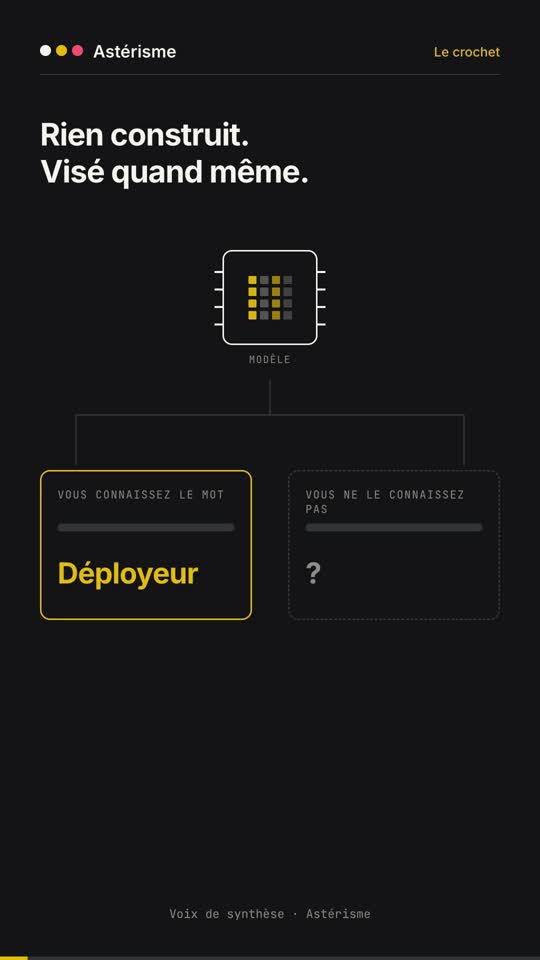
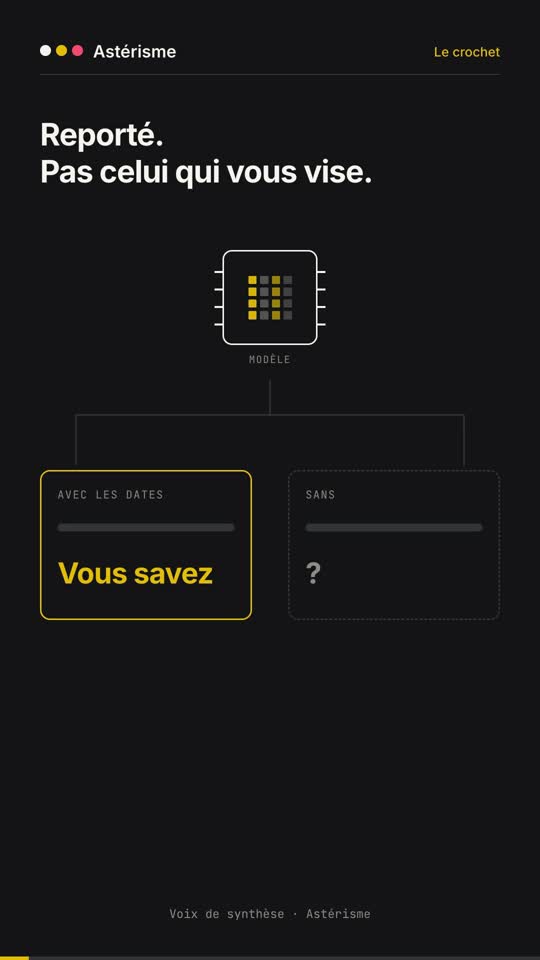
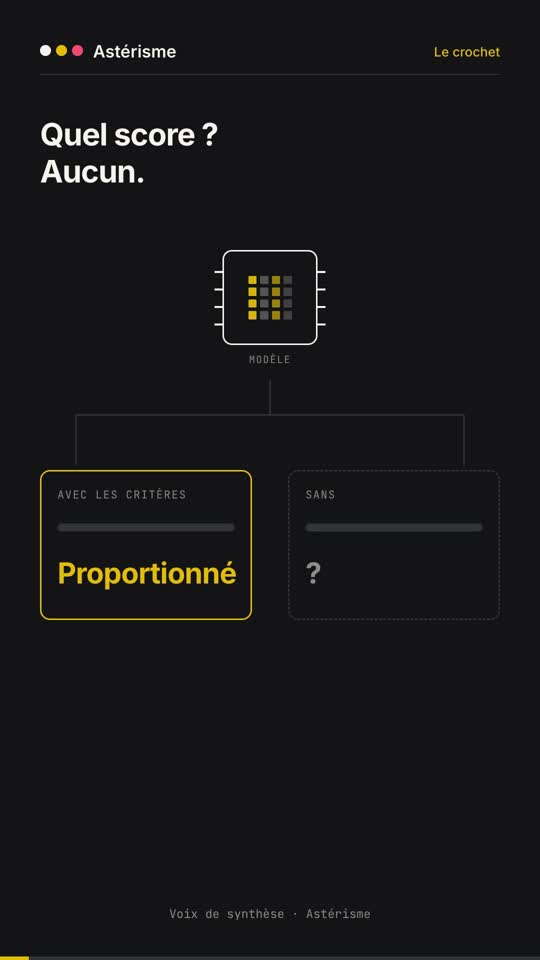
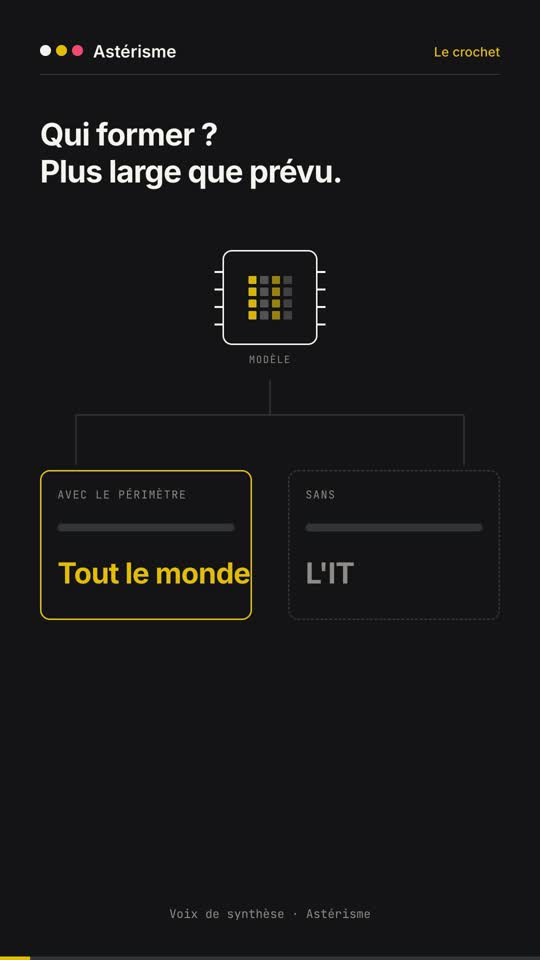
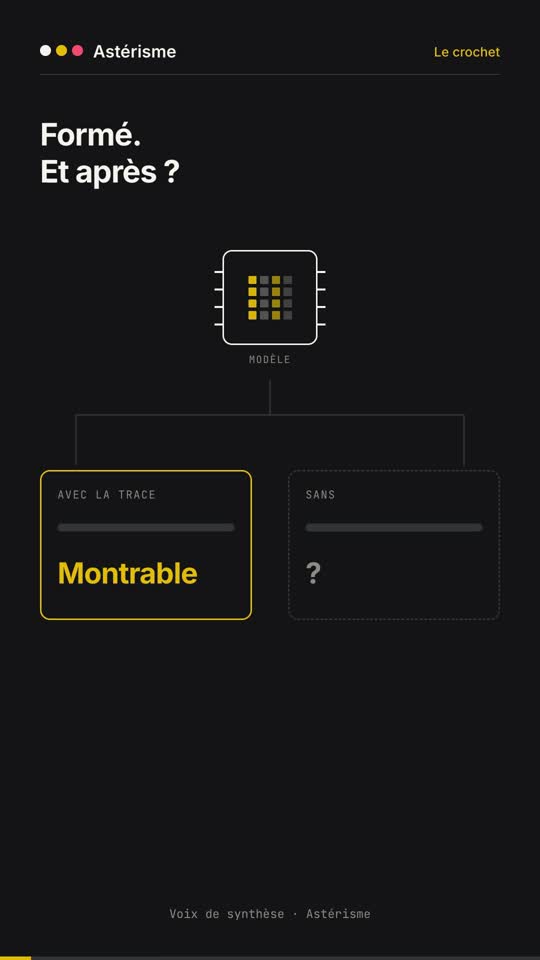
Synthetic voice, flagged on screen within the first five seconds. Article 50 of the regulation requires it, and the rule applies to us as well.
The record, not the diploma.
- The list of participants, the date, the programme followed.
- The material, in an open format, reusable for new joiners.
- Your organisation's AI usage charter, written during the day.
- The register of AI tools in service, with their role and their hosting.
These documents are not formalities. They are the records an authority, a client or an insurer will ask for, and the only ones that prove the obligation was met.
Said beforehand, not after.
No official certification exists for Article 4, and we issue none. No label makes an organisation “AI Act compliant”: compliance is shown through documents you keep, not through a logo. We train, we write with you, and you leave with the records. That is all, and that is what the regulation requires.
Nor will we tell you that you risk a fifteen-million-euro fine. Article 4 carries no penalty of its own: the amounts in circulation belong to the general regime and target other obligations. We would rather say so than sell a fear.
On your premises, in your language.
One day per group, at your premises or by video call, in French, Dutch or English. From €1,900 excluding VAT for a group of eight people at most, records included. Beyond eight, or if several professions must be covered separately, pricing follows the free diagnostic. The training is included in any Astérisme engagement.
The free webinar on Thursday 10 December covers the first part of this day in forty-five minutes, questions included.
Firms covered by joint committee 336 — accountants, tax advisers, lawyers, statutory auditors, bailiffs, architects, veterinarians, surveyors — may claim the Liberform training allowance, up to €60 per day per participant, capped at €1,750 per firm per calendar year. We check with you whether your firm qualifies.
Your teams already use AI.
Thirty minutes to see where you stand, and what Article 4 actually requires of you.